Custom Web App vs Off-the-Shelf Software: Which One Actually Saves You Money?
Custom Web AppOff-the-Shelf SoftwareBespoke Software DevelopmentTotal Cost of OwnershipDigital Transformation- Date : Sep 25
- Time : 6 Min Read
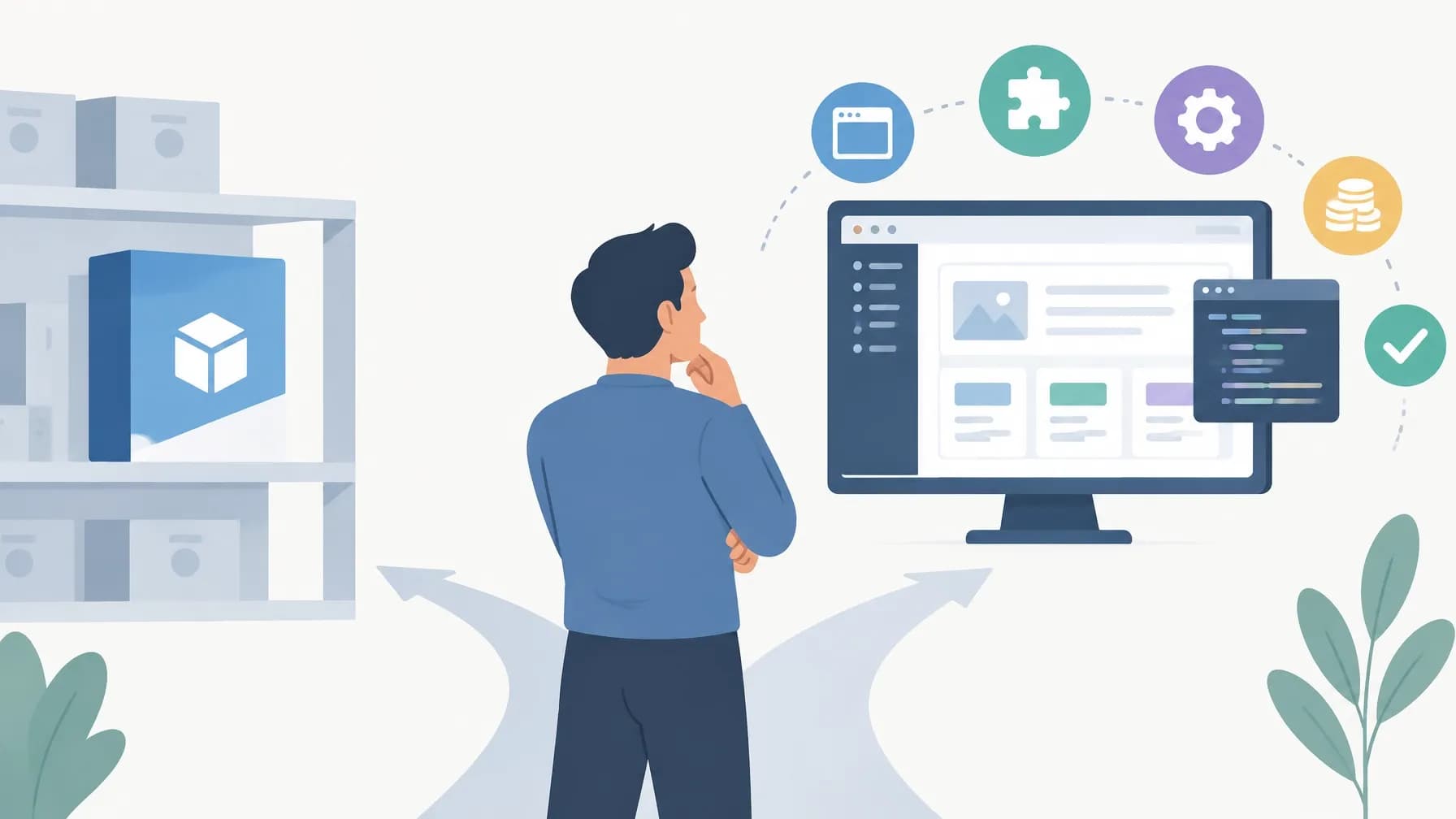
If you are paying for software features your team never uses, reshaping your processes to fit someone else's system, and patching the gaps with spreadsheets, the cheapest-looking option on the invoice may not be the most economical. The custom web app vs off-the-shelf software debate is rarely a straight comparison between a monthly subscription and a development quote. It is a question about manual work, control, and what a system costs to run over five years.
Off-the-shelf software usually costs less at the start. A custom web application normally requires more planning and a larger upfront investment. Yet a bespoke build can become the cheaper route once it removes duplicated administration, retires overlapping tools and scales without a new licence for every person you hire.
Here is how to decide which one actually saves your business money, and why the answer is sometimes a combination of both.
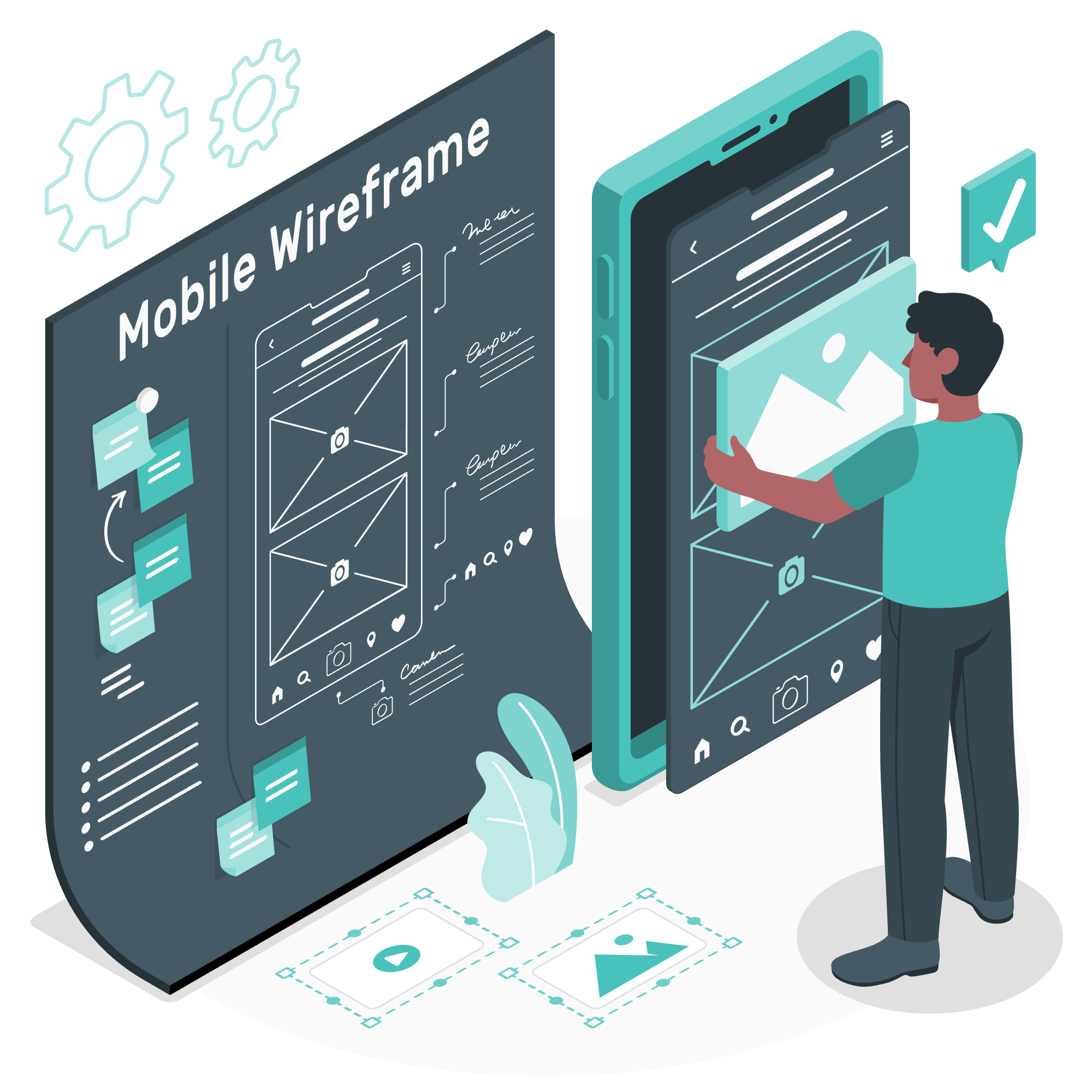
Custom Web App vs Off-the-Shelf Software: The Real Cost Is Total Cost of Ownership
A fair comparison goes well beyond the purchase price. Total cost of ownership (TCO) captures every direct and indirect cost of running a system across its useful life:
- Licences, or development and build costs
- Configuration and implementation
- Integrations and data migration
- Hosting and infrastructure
- Support, maintenance and upgrades
- Training and onboarding
- Manual work created by system limitations
- Additional tools, add-ons and middleware
- Data export and switching costs
An off-the-shelf platform can look inexpensive because the cost is spread across small monthly payments. A custom application can look expensive because most of the investment is visible at the start. Neither headline figure tells the full story.
Off-the-shelf software: where it wins and where it costs you
Off-the-shelf software is built for a broad market. It provides standard functions that can be configured to suit different organisations, and for many businesses that is genuinely the right call.
Advantages: lower initial cost, faster implementation, a mature interface and documentation, vendor-managed hosting and security updates, and a ready supply of integrations and support resources.
Limitations: you may pay for features you never touch, your team adapts its processes to the platform, advanced functionality sits behind premium tiers, integrations add recurring fees and failure points, vendor price rises land outside your control, and the product roadmap is not yours to set.
Use it when your requirements are standard, your team is small and speed matters. A growing business does not need a bespoke accounting platform, a proven product will handle invoicing and reporting better and cheaper than building those functions from scratch.
The problem begins when a general-purpose platform becomes the backbone of a process that is unique to you.
Custom web applications: where the investment pays back
Custom web application development builds software around your actual processes, data and users, whether that is an internal operations platform, a customer portal, a booking system or a workflow dashboard.
Advantages: a system shaped around genuine workflows, no spend on irrelevant functionality, tighter control over integrations and data flows, role-specific user experiences, less duplicate entry, and full ownership of future priorities. It can also turn a proprietary process into a competitive advantage.
Limitations: a higher initial investment, the need for proper discovery and requirements planning, and ongoing responsibility for maintenance, security, hosting and improvements. Scope creep and unclear objectives are the fastest ways to make a build uneconomical.
A custom application earns its place when workflows are complex, several systems must talk to each other reliably, or a large volume of repetitive administration is eating staff time.
A worked example: five years, fifteen staff
Take a service business with 15 employees paying £300 a month for a core platform, £150 a month for modules and integrations, and £6,000 for configuration and data migration. Over five years that is roughly £33,000 in direct cost, before you count a single hour of workaround time.
Now imagine an illustrative custom application: £35,000 to discover, design and build, plus £600 a month for hosting, maintenance and support. Five years comes to about £71,000. On paper it looks more than twice as expensive.
But if the bespoke system removes five hours of administrative work per employee each week, the recovered productive capacity can outweigh the difference by a wide margin. These are illustrative figures, not market estimates, your own staff costs, quotations, user numbers and growth plans must drive the calculation.
So the question shifts from 'which option has the lowest purchase price?' to 'which option costs least to deliver this process over its useful life?'
Where off-the-shelf costs quietly grow
Unused functionality means you fund a broad product to get a narrow tool. Per-user pricing bites hardest as you grow, and contractors or external partners often need extra licences. Advanced reporting, automation and API access tend to sit in higher tiers. Workarounds, manual exports, duplicate data entry, spreadsheet shadow systems, add overhead and create errors. Middleware and paid connectors add dependencies to monitor. And when the platform no longer fits, migration, retraining and rebuilding integrations can be painful.
If repetitive manual steps are the real cost, it is worth reading our guide to automation software for growing businesses before committing to either route.
Where custom development costs can grow
Custom software is not automatically cheaper; it has to be managed as a long-term digital asset. The biggest risks are starting before the business problem is defined, adding features without weighing their value, designing only for today's requirements, choosing technology that is hard to maintain, skipping documentation, and leaving security and testing until the end.
Security, privacy and ownership
Both routes carry responsibility. With off-the-shelf software, assess the vendor's controls, data processing terms, access permissions, hosting locations, backups and incident response, and understand what happens to your data if the supplier changes or closes your account. With custom software you gain control over architecture and data flows, but you also own secure development, dependency management, monitoring and updates.
The National Institute of Standards and Technology's software supply chain guidance is a useful reference for both. Privacy belongs in the design, not the launch: data minimisation, retention rules, role-based access and audit trails should reflect what you actually need to process.
When Custom Web Application Development Is Worth the Investment
Custom development deserves serious consideration when several of these statements apply:
- Your team leans on spreadsheets to compensate for software limitations.
- Staff re-enter the same information into multiple systems.
- Your processes genuinely differ from what standard platforms support.
- Several systems need to share data reliably.
- Software costs climb with every hire.
- Customer experience depends on a tailored digital journey.
- The process will become more complex over the next three to five years.
- Role-specific dashboards, permissions or automation would unlock capacity.
- The software could become a business asset or differentiator.
If only one or two of these are true, better configuration or process improvement may be enough, and some processes are better left alone, as we explain in five processes you shouldn't automate yet. If most apply, continuing to add subscriptions and workarounds is likely costing more than a focused build.
Buy, build or combine?
The choice need not be binary. A practical strategy keeps reliable off-the-shelf tools for commodity functions, accounting, email, payroll, and builds a custom application for the process that carries the most friction or competitive value. A bespoke operations portal sitting between your accounting platform and your inbox gives the team a system designed around its core workflow, without rebuilding what already works.
The best investment usually matches the level of uniqueness in the problem.
How TeqFlo approaches bespoke app building
TeqFlo brings 14 years of experience across web development, software development and app development. Every project starts with discovery rather than technology selection: identifying the real operational problem, stripping out unnecessary complexity and defining a solution that can evolve.
That process runs through discovery, planning and scope definition, user-focused design, secure and maintainable development, structured testing, then careful launch and ongoing support. It is a deliberately unhurried sequence, because the most expensive software is the kind you have to rebuild. You can explore TeqFlo's bespoke web and software development services to see how the approach works in practice.
If the answer is still unclear, start with a structured discovery exercise and a total-cost-of-ownership comparison. That replaces guesswork with a decision based on measurable business value.
Frequently asked questions
Is custom web application development always more expensive? No. It normally requires a higher upfront investment, but it can reduce recurring licences, manual administration, integration costs and future switching costs. The outcome depends on scope and on the value of the process it improves.
How do I calculate whether a custom app will save money? Compare five-year total cost of ownership: subscriptions, add-ons, implementation, integrations, training, maintenance, hosting and staff time lost to workarounds. Then estimate the operational value the custom application creates.
Can a custom web app integrate with existing software? Yes. Integrations can be planned around your CRM, accounting system, databases, identity provider and other business tools. The exact approach depends on available APIs, data structures and security requirements.
How long does a custom application take to build? Timelines depend on complexity, integrations, user roles and testing requirements. TeqFlo states that most of its software and app projects are delivered within 8–16 weeks, subject to requirements and scope.
What if I need standard software as well as a custom application? A combined approach is often the most economical. Keep off-the-shelf software for standard tasks and use custom development where flexibility matters, or where workarounds are creating measurable cost.