How Artificial Intelligence Helps Businesses: Transforming Operations and Driving Growth
AI AutomationBusiness AutomationDigital TransformationTech TrendsWorkflow AutomationCustomer EngagementLead Generation- Date : Dec 5, 2025
- Time : 5 Min Read
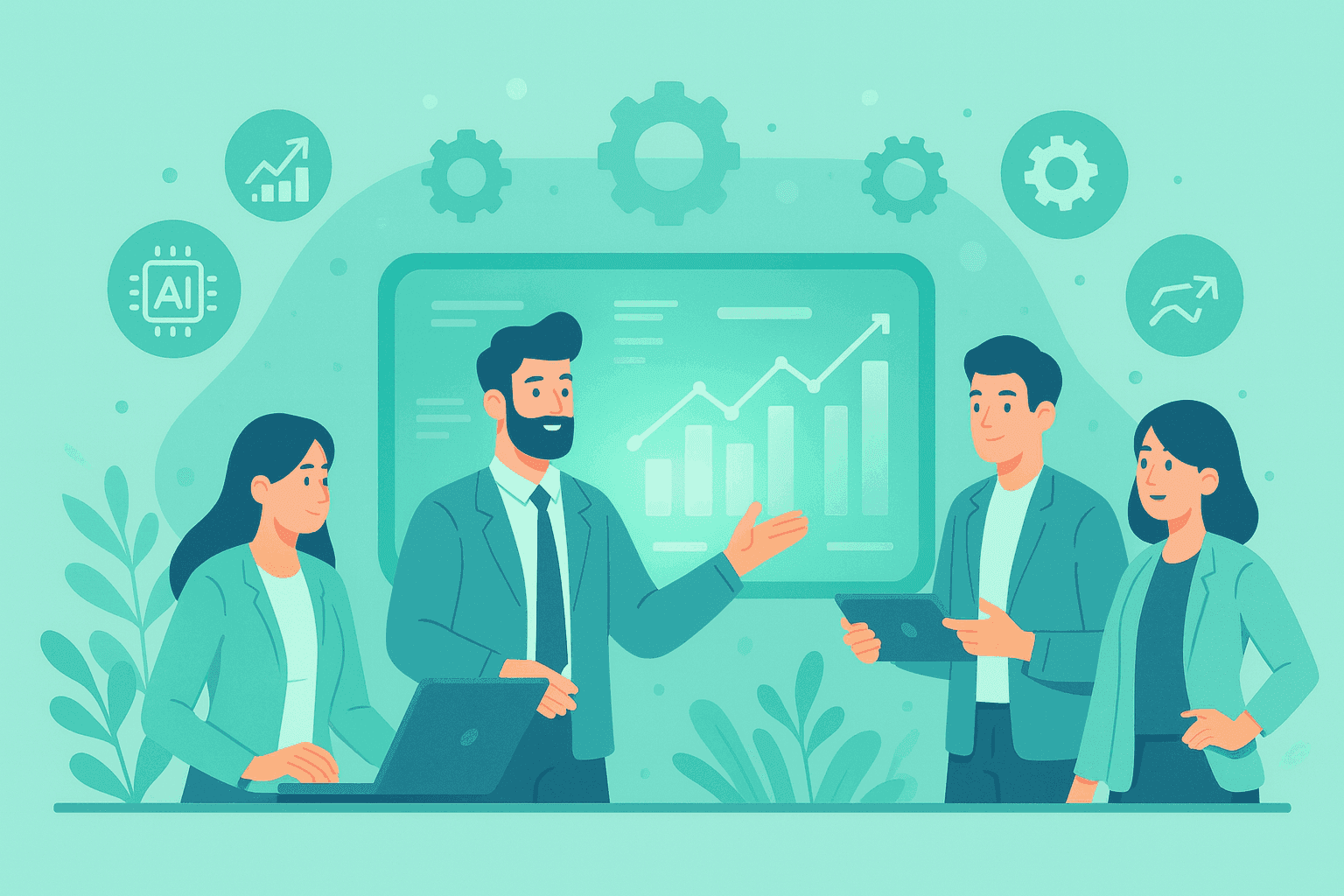
Artificial intelligence (AI) has evolved from a futuristic concept into a practical business tool that's reshaping how organisations operate, make decisions, and grow. Understanding how artificial intelligence helps businesses is essential for any modern enterprise looking to stay competitive, streamline operations, and unlock new opportunities. From automating routine tasks to delivering deep strategic insights, AI is transforming operations and driving growth across virtually every industry, with research showing adoption has more than doubled since 2017 and over 60% of organisations planning increased investment.
Key Ways AI Helps Businesses Transform Operations
To grasp how artificial intelligence helps businesses, it’s crucial to explore its core applications that enhance efficiency and productivity. AI technologies enable businesses to automate processes, analyse data, and improve decision-making in ways that were previously impossible. Here are the primary areas where AI makes a significant impact:
- Automation of Repetitive Tasks: AI systems can handle time-consuming, manual activities such as data entry, invoice processing, and customer enquiry routing. This frees up employees to focus on higher-value work, reducing errors and operational costs.
- Data Analysis and Insights: AI algorithms process vast amounts of data rapidly, identifying patterns and trends that humans might miss. This supports data-driven decision-making in areas like sales forecasting, market research, and performance optimisation.
- Enhanced Customer Service: AI-powered tools, such as chatbots and virtual agents, provide 24/7 support by answering frequently asked questions and resolving common issues. This improves response times and customer satisfaction while allowing human agents to handle more complex cases.
- Supply Chain and Inventory Management: Predictive analytics in AI helps businesses forecast demand, optimise stock levels, and streamline logistics. This reduces waste, minimises delays, and ensures efficient resource allocation.
- Personalised Marketing: AI analyses customer behaviour and preferences to deliver tailored content, product recommendations, and targeted advertising. This boosts engagement, conversion rates, and customer loyalty by making interactions more relevant.
For businesses looking to improve their digital presence, implementing engaging user interfaces can significantly enhance conversion rates. Learn more in our article How to Increase Website Conversions: Proven Strategies and Tips.
Driving Business Growth Through Strategic AI Implementation
The true power of how artificial intelligence helps businesses lies in its ability to drive sustainable growth by enhancing both internal efficiency and external customer value. AI not only streamlines operations but also uncovers new opportunities for expansion and innovation. Key growth drivers include:
- Improved Customer Experience: AI enables hyper-personalisation by analysing individual customer interactions, leading to better product recommendations and support. This builds long-term loyalty and increases customer lifetime value.
- Predictive Capabilities: By analysing historical and real-time data, AI models can forecast future trends, sales volumes, and potential risks. This allows businesses to be proactive—adjusting strategies, optimising pricing, and seizing market opportunities ahead of competitors.
- Lead Generation and Sales Enhancement: AI tools qualify leads by analysing prospect behaviour and intent, ensuring sales teams focus on high-potential opportunities. This accelerates the sales cycle and boosts revenue growth.
- Operational Scalability: AI systems can handle increasing workloads without proportional increases in staff or resources, making it easier for businesses to scale efficiently as they grow.
Successful implementation of AI requires a clear strategy. Start by identifying specific business problems AI can solve, such as reducing manual workload or improving customer engagement. Ensure data quality is high, as AI systems rely on accurate information to function effectively. Many businesses begin with focused solutions that address key pain points, allowing for measurable ROI and easier scaling. For insights on boosting enquiries, refer to How to Increase Web Enquiries: 7 Proven Strategies and the Power of High-Converting Landing Pages.
Real-world examples demonstrate AI's impact across industries. Retailers use it to optimise logistics and personalise shopping experiences, while financial institutions employ it for fraud detection and risk assessment. The common theme is integrating AI to enhance human decision-making and eliminate inefficiencies.
For small and medium businesses, leveraging AI often starts with targeted solutions that offer clear benefits, such as automation tools that streamline workflows or data analysis platforms that provide actionable insights. The goal is to begin with a defined objective and a solution that aligns with your business needs. Ultimately, understanding how artificial intelligence helps businesses is the first step toward harnessing its potential for growth and efficiency. Businesses that adopt AI strategically become more agile, customer-centric, and competitive in a digital economy. For those ready to explore tailored digital solutions, expert guidance can help implement systems that drive real outcomes.