Website Design in Maidenhead: What Local Customers Actually Judge Your Site On
Website DesignWeb DevelopmentUI/UX DesignConversion OptimizationEnquiry ConversionLead GenerationCustomer Engagement- Date : Nov 2
- Time : 5 Min Read
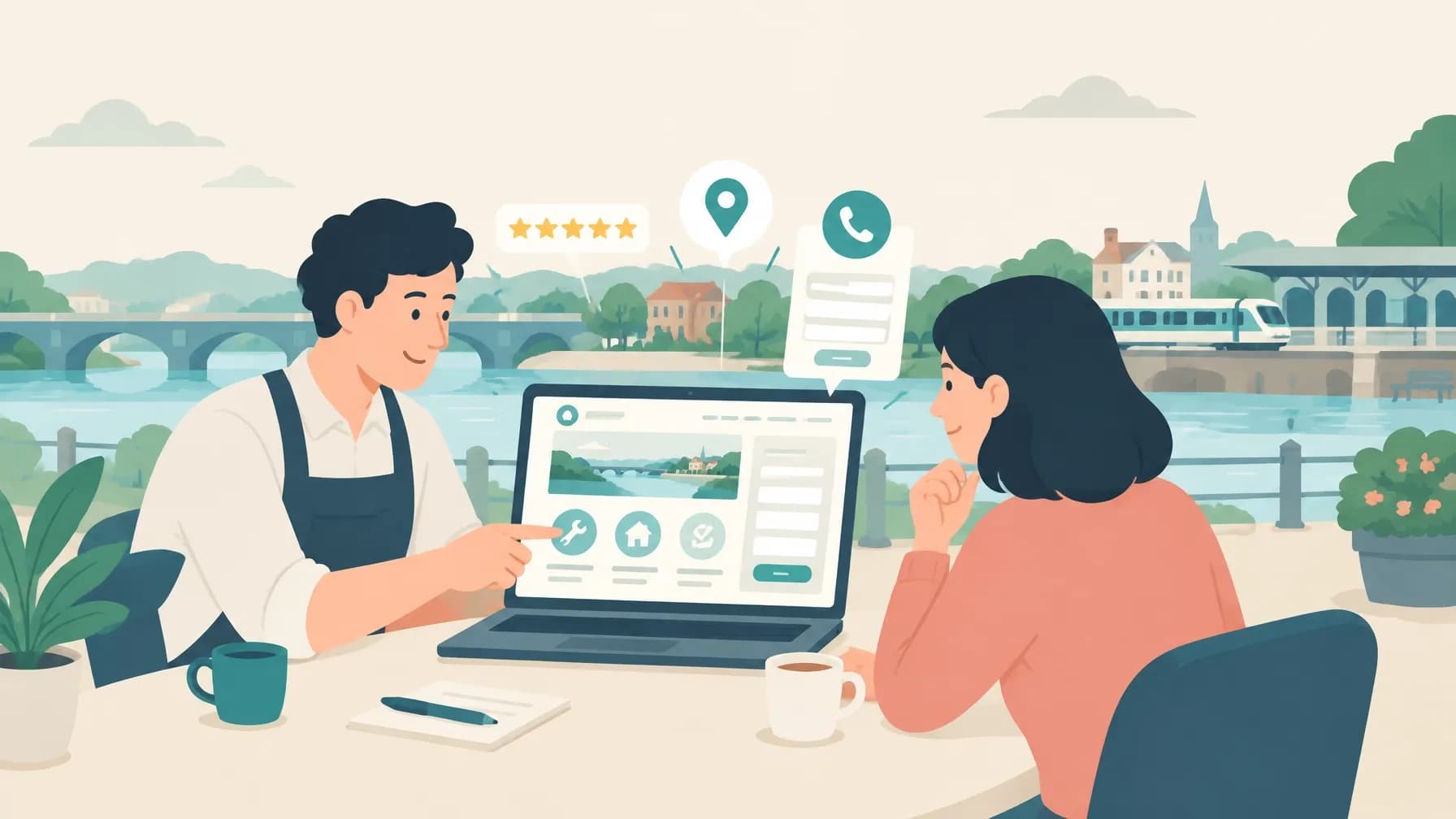
When someone in Maidenhead lands on your website, they are not conducting a full audit. Website design in Maidenhead: what local customers actually judge your site on comes down to a handful of quick, practical signals. Within seconds, a visitor is weighing three things: does this business offer what I need, does it seem trustworthy, and can I get in touch easily?
Answer all three and an enquiry is likely. Leave any one of them unclear and the visitor will return to Google and click a competitor instead.
That moment matters for tradespeople, solicitors, travel companies, estate agents, consultancies and every other local service business. A recommendation or a search result may bring someone to your site, but the site still has to help them take the next step.
Good website design in Maidenhead is therefore more than a polished appearance. It connects your offer, your proof and your contact route in a way that makes sense to the people you want to serve. Here are the signals local customers are most likely to look for.
Website Design in Maidenhead: The First Impressions That Decide Everything
Clarity about what you do and where you do it
A visitor should not have to study your homepage to work out what your business provides. State your main service plainly, identify the customers or problems you serve, and make your service area easy to find.
A Maidenhead property solicitor, a heating engineer and a travel consultant should each make their offer immediately distinguishable. Avoid relying on vague claims such as ‘quality you can trust’ without explaining what you actually do.
Local relevance does not mean repeating ‘Maidenhead’ in every heading. It means making useful details clear: whether you serve the town centre, the SL6 postcode or nearby Berkshire villages; whether customers can visit you; and whether you travel to them. Name surrounding locations only if you genuinely serve them.
A focused opening section should answer three questions at once: what service do you provide, who is it for, and what should a prospective customer do next? That clarity benefits people and helps search engines understand the page. It also reassures a local visitor that they have found a relevant provider, rather than a generic template site that simply happens to mention their town, a common problem covered in our guide to the 7 mistakes you’re making with website design in Maidenhead.
Mobile usability that fits real-life browsing
Maidenhead’s Elizabeth Line and M4 connections are part of daily life for many residents and commuters. That is not a reason to assume every visitor is on a train, but it is a reminder that people browse at different points in their day: at home, between appointments or while on the move.
On a small screen, check whether a visitor can tap a phone number to call without copying it, find the main service and area served without digging through menus, complete an enquiry form without excessive typing or awkward scrolling, read the content without pinching and zooming, and see a useful next step without being blocked by a large pop-up.
Test the live site on real phones, not just a desktop preview. Page speed also deserves attention: Google’s PageSpeed Insights combines lab analysis with field data where available, helping teams assess performance against real-user experience metrics.
Proof that is easy to find and easy to believe
Customers comparing local providers want reasons to trust the business behind the website. Put relevant evidence close to the service information, not several clicks away.
That evidence might include genuine reviews, photographs of completed work, professional qualifications, relevant memberships, clear guarantees, case studies, or the names and roles of the people customers will deal with. The right proof depends on the sector: a trades business might show real project photographs, a consultancy could describe a client challenge and the work delivered, and a law firm may explain its areas of practice and introduce its team.
Use evidence you can substantiate. Do not present stock photography as your own work, publish testimonials without permission, or imply that a qualification or membership applies when it does not. Specific, authentic detail usually reassures far more than broad claims to be ‘the best’.
A useful test is to ask someone unfamiliar with your business to find the proof that matters most to a potential customer. If they cannot locate it quickly, reconsider where and how it is presented. This is exactly where bespoke design outperforms a template, and our article on why bespoke web design is the secret sauce for Maidenhead businesses explains why.
Practical Website Design in Maidenhead Checks That Turn Interest into Enquiries
A contact route that matches the customer’s need
There is no single best enquiry method for every Maidenhead business. Someone needing an urgent repair may want to call. A prospective client comparing legal services may prefer to describe their circumstances in a form. A travel customer may expect to request a consultation or quote.
Make the appropriate route prominent, label it clearly and explain what happens next. If you ask visitors to submit a form, request only the information needed to respond. Tell them when and how you will reply, and provide a clear confirmation after submission.
Where a traditional form feels cumbersome, a conversational alternative can help. Rather than presenting a wall of fields, conversational forms guide visitors through one question at a time, which feels less like admin and more like a conversation, the psychology behind this is covered in one question at a time: the psychology behind conversational forms. It is worth reviewing why traditional contact forms are killing your conversion rates before you add another mandatory field.
Consistent local information across your website and Google
Your website and Google Business Profile should agree on the essentials: business name, phone number, address or service area, opening hours and services. If information conflicts, customers may be unsure whether they have found the right business.
Google states that local results are mainly based on relevance, distance and prominence. Its guidance recommends keeping Business Profile information complete and accurate, responding to reviews and adding photos. These actions help customers understand your business; they do not guarantee a particular ranking.
Link your profile to the most relevant page on your site where possible. A location or service page can be more useful than a homepage if it gives specific detail about the service, coverage and contact options. Keep it genuinely helpful: near-identical pages for places you do not serve can undermine trust rather than improve it.
For businesses customers visit in person, include practical information such as directions, parking or appointment arrangements. For businesses that travel to customers, explain the service area clearly without publishing a private home address as a public business location.
Professionalism is also a matter of performance
Visual design creates an impression, but reliability sustains it. Broken links, unclear navigation, outdated opening hours and forms that fail to submit all make it harder to trust a business, and each one quietly costs enquiries, as we explain in the silent revenue killer: how automated testing prevents costly website downtime.
A professional site should be readable, straightforward to navigate and usable by people with different access needs. That includes sufficient colour contrast, descriptive link text, a sensible heading structure and forms with clear labels. These choices improve usability for customers and make the site easier to maintain.
Treat performance as an ongoing part of web development in Maidenhead, not a one-off launch task. Review analytics and search queries, test important journeys, check enquiry forms and update service details as the business changes. If your site is central to lead generation, routine technical checks can surface issues before customers encounter them.
Turning a good impression into an enquiry
A local service-business website earns the enquiry by making the decision easier: a visitor can recognise the service, see relevant proof, understand the coverage and make contact in a way that suits them. It cannot control every decision, but it can remove avoidable uncertainty and friction.
TeqFlo builds bespoke, responsive and SEO-friendly websites around how a business actually wins work. With 14 years of experience across web development, software development and app development, we help small and medium businesses streamline their operations and unlock their digital potential through bespoke solutions built around their business. You can see how we work at teqflo.io.
If you are weighing up a new site or a focused improvement, our guide to what to know before you hire for website design in Maidenhead is a sensible next read.
Start by reviewing your site from a customer’s perspective on a phone. Can they tell what you do, see why they should trust you and make contact without effort? If not, that is the practical place to begin, and often the fastest route to more local enquiries.