Why Conversational Forms Will Change the Way You Approach SEO Friendly Website Design
Website DesignSEO OptimizationConversion OptimizationCustomer EngagementAI AutomationDigital TransformationWeb DevelopmentLead Generation- Date : Feb 27
- Time : 9 Min Read

Let’s be honest: nobody actually likes filling out forms. Whether it’s a standard "Contact Us" page or a detailed lead generation survey, the traditional static form often feels like a digital interrogation. You’re asking a user to do a bunch of work before they’ve even had a real conversation with you.
In 2026, the digital landscape has shifted. We aren't just looking for information; we're looking for interaction. This is where conversational forms come in. At TeqFlo, we’ve seen a massive shift in how businesses approach web development, moving away from rigid structures toward fluid, AI-driven experiences.
But here’s the kicker: conversational forms aren’t just a "nice-to-have" for your UI/UX design. They are a secret weapon for your SEO.
The Static Form Paradox: Why Your Leads Are Ghosting You
Traditional forms are friction points. Every extra field you add to a standard form reduces the likelihood of a completion. If you've ever looked at your analytics and wondered why users land on your contact page but never actually reach out, you’re likely seeing the "Form Fatigue" effect.
From an SEO perspective, this is a disaster. High bounce rates on your key conversion pages tell search engines that your content isn't meeting the user's needs. If a user lands on your site, sees a 12-field form, and immediately hits the "back" button, your rankings will eventually take a hit.
Conversational forms flip this script. Instead of presenting a wall of empty boxes, they present a dialogue.
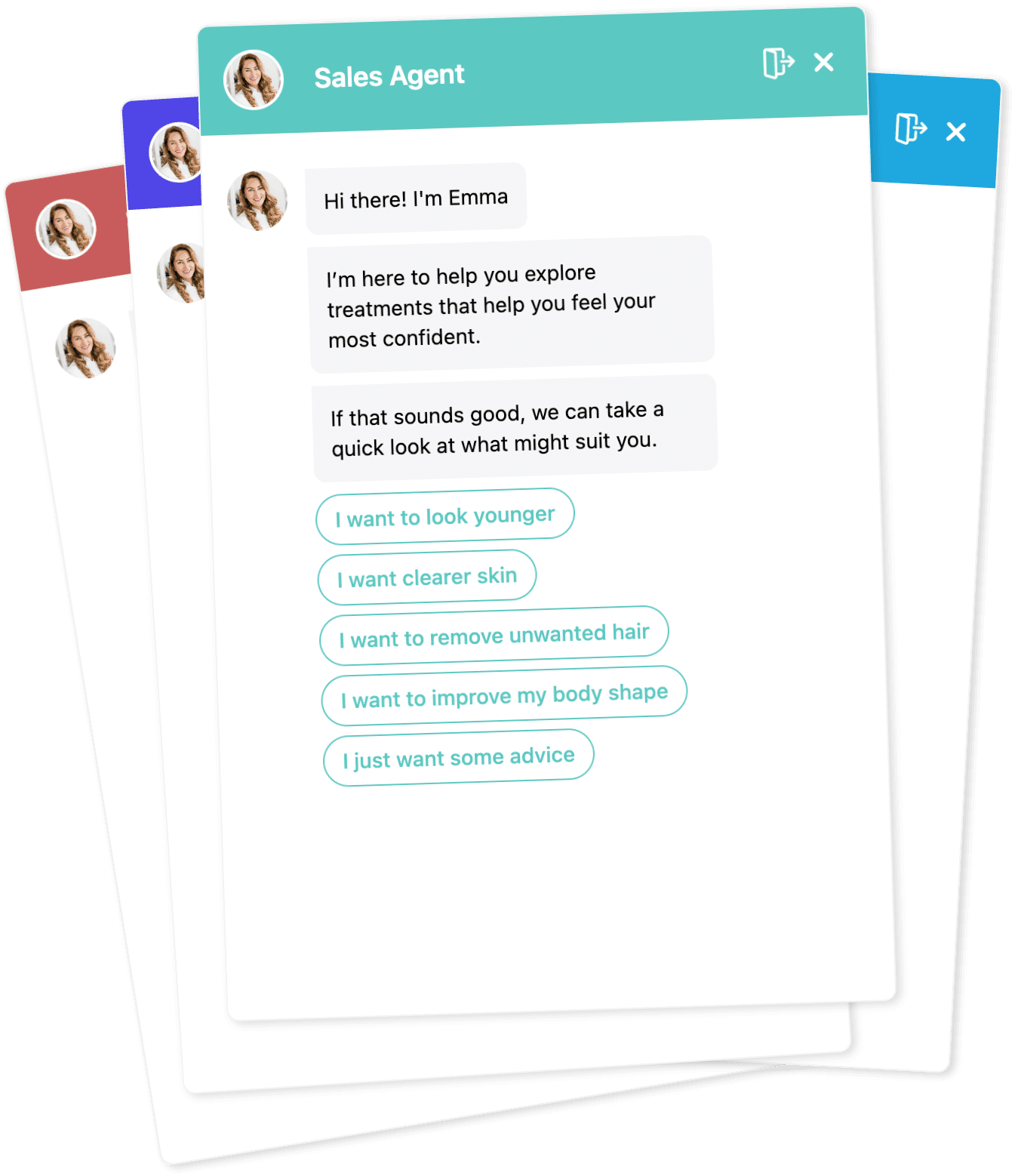 A dynamic chat interface guides users through a personalized journey, replacing the static "Contact Us" wall.
SEO in 2026: It’s All About User Signals
Search Engine Optimization isn't what it used to be. While technical SEO and backlink profiles still matter, Google’s algorithms are increasingly prioritising "user signals." This includes metrics like Dwell Time (how long a user stays on your page) and Bounce Rate (how quickly they leave).
When you integrate a conversational experience like ChatForm, you aren't just collecting data; you're increasing engagement time.
1. Boosting Dwell Time
When a visitor interacts with a conversational form, they are actively participating in a process. They read a question, select a response, and wait for the next prompt. This "micro-engagement" keeps them on the page significantly longer than a static form would. To search engines, this extended stay is a huge green flag, it signals that your website is providing value and holding the user’s interest.
2. Reducing Bounce Rates
A conversational interface feels less like a chore and more like a service. By breaking down the information gathering into bite-sized, manageable steps, you lower the cognitive load on the visitor. Lower friction equals fewer bounces. In the eyes of an SEO audit, a lower bounce rate across your service pages translates to higher topical authority.
The Shift from Keywords to User Intent
The way people search has evolved. With the rise of voice search and advanced LLMs (which we’ve covered in our guide to leading large language models), users are typing, and speaking, in full sentences. They are searching with intent.
Conversational forms are uniquely positioned to capture this intent. While a traditional form might ask for a "Project Type" via a dropdown, a conversational form can ask, "What are you trying to achieve today?"
This allows you to:
- Capture long-tail query data directly from your users.
- Understand the specific language your customers use, which can inform your SEO strategy.
- Provide immediate, context-aware responses that build trust.

Meet ChatForm: The Future of Interactive Enquiry Capture
At TeqFlo, we developed ChatForm to bridge the gap between static websites and interactive user experiences. It’s designed to transform your standard enquiry forms into a virtual sales agent that works 24/7.
One of the biggest hurdles businesses face when upgrading their tech stack is the complexity of implementation. We wanted to eliminate that. ChatForm is integrated via a simple script tag. No massive backend overhaul, no complex software development cycles, just a plug-and-play solution that immediately elevates your site’s UX.
Why Conversational Completion Rates are Higher
Psychologically, we are wired for reciprocity. When a chat interface asks us a simple question like "What's your name?", we feel a natural inclination to answer. Once that first "micro-conversion" happens, the user is much more likely to see the process through to the end. We’ve seen completion rates jump by switching from a static form to a guided conversation.
 ChatForm turns static contact points into guided, interactive conversations that boost engagement.
Data-Driven Content Strategy
The information you gather through conversational forms is a goldmine for your digital transformation efforts. By reviewing the paths users take within your ChatForm, you can identify:
- Common Pain Points: Are people asking about specific services you haven't highlighted enough?
- Content Gaps: If users are asking questions that your website doesn't answer, that's your next blog post topic.
- User Personas: Are your visitors looking for web development near Maidenhead or high-level AI automation?
By aligning your content strategy with actual user dialogue, you create a feedback loop that naturally boosts your SEO. You’re no longer guessing what keywords to rank for; you’re using the exact phrases your customers are giving you.
Local SEO and the Conversational Edge in Maidenhead
For businesses targeting specific regions, like our partners looking for software app development near Maidenhead, local relevance is key.
Conversational forms can be geo-aware. You can tailor the opening gambit based on the user's location or the specific page they are on. Imagine a visitor landing on your Maidenhead-specific landing page and being greeted with: "Hi! Looking for a local tech partner in Maidenhead? I can help you find the right solution."
This level of personalization is impossible with a standard form, and it dramatically increases the "Local Trust" factor, which is essential for lead generation.
Technical Implementation: Easy as a Script Tag
As a developer, I know that "new features" often mean "new headaches." That's why we built ChatForm to be lightweight.
The integration process looks like this:
- Define your flow: Tell us what you want the conversation to capture (the questions, logic, and where the data needs to go).
- Customise the look: Choose the tone, branding, and visual styling you want visitors to experience.
- TeqFlo builds the virtual agent: We implement the flow behind the scenes, wire up integrations, and configure the behaviour so it fits your process.
- Paste the script tag: We provide a single script tag for your site—drop it into your header or footer and you’re live.
Whether you are running a bespoke React application or a standard WordPress site, the conversational agent sits on top of your existing architecture. It won't interfere with your automated testing suites or slow down your page load speeds: another critical factor for SEO.
Building Trust and Handling Data
In 2026, data privacy is non-negotiable. Conversational forms can actually help with privacy policy compliance by explaining why you need certain information in real-time.
Instead of a tiny "read our terms" link at the bottom of a form, a conversational agent can say: "I just need your email so we can send over the quote you've requested. We promise not to spam you." This human-centric approach to data collection builds a level of trust that static forms simply cannot replicate.
Conclusion: Don't Just Build a Website, Build a Conversation
The era of the "brochure website" is over. To survive in 2026, your digital presence needs to be an active participant in your sales process. By switching to conversational forms, you are optimizing for the two most important audiences: your users and the search engine algorithms.
You get higher engagement, better lead data, and a significant boost to your SEO metrics: all through a tool that’s as easy to install as a tracking pixel.
If you’re still using static forms, you’re leaving leads: and rankings: on the table. It’s time to change the way you approach SEO friendly website design.
Ready to see how ChatForm can transform your conversion rates? Get in touch with the TeqFlo team today and let’s turn those static forms into your hardest-working sales agents.
Related posts